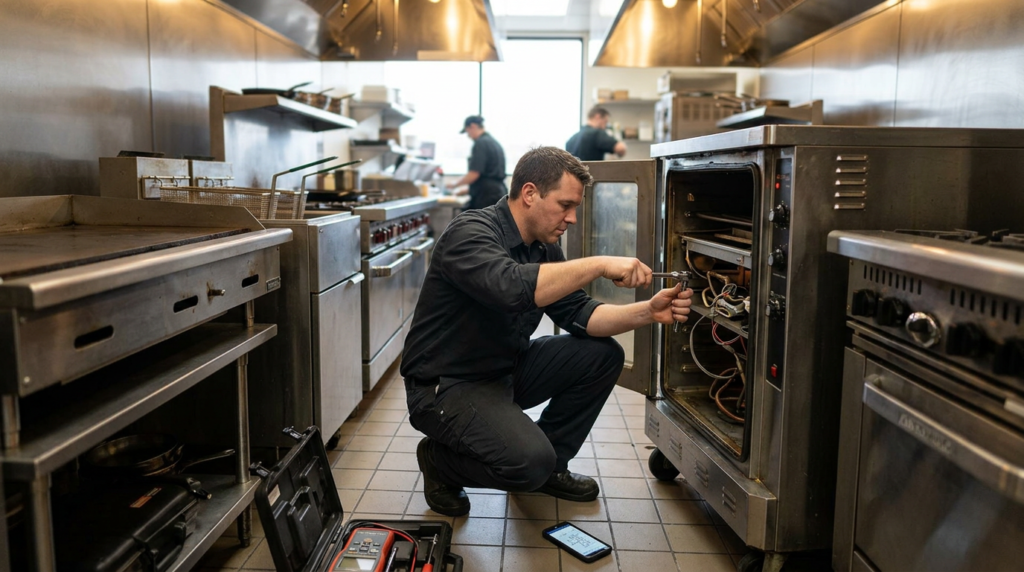
Quick answer: Call a service company that can handle commercial refrigeration and the HVAC systems that affect kitchen performance, dispatch quickly, and explain diagnosis and next steps in plain language. Confirm they service walk-ins, reach-ins, ice machines, and make-up air/ventilation. A reliable technician will verify temperatures, airflow, electrical readings, drainage, and control operation before recommending parts or major repairs.
Start With the Equipment That Can Shut You Down Fast
In a busy kitchen, the quickest way to lose product (and service) is a refrigeration or ventilation failure. For many operators, that means starting your search with a provider that works on commercial refrigeration and related HVAC systems—walk-in coolers/freezers, reach-ins, prep tables, ice machines, and the make-up air that keeps hoods and dining areas balanced. If you’re searching locally, Sun Prairie commercial kitchen equipment repair should include the ability to troubleshoot both cooling performance and the building conditions that affect it.
On the phone, describe symptoms, not just the unit name. “Walk-in running constantly and can’t get below 45°F,” “ice machine making hollow cubes,” or “hood is pulling too hard and doors won’t close” gives a dispatcher enough detail to send the right technician and likely parts.
General Guidance: When to Shut Down, Move Product, or Call Immediately
General guidance only—your local health code and your food safety plan should be the final word. If refrigeration can’t hold safe temps, treat it as urgent.
Call immediately if a walk-in/reach-in is warming and you have potentially hazardous foods inside, if you smell electrical burning, see sparking, hear loud grinding, or a breaker keeps tripping. Move product to another working unit if you can’t get temperatures back into a safe holding range quickly, if the unit is above 41°F and rising, or if doors won’t seal and warm air is pouring in.
Shut down equipment if there’s smoke, active electrical arcing, a refrigerant odor concern, water leaking onto electrical components, or a fan/motor is seizing and could fail catastrophically. Keep doors closed while you triage—every extra minute of open-door time adds heat and humidity that makes recovery harder.
Typical Failure Signs and What They May Point To
Many problems have recognizable patterns, but these are only typical/possible causes—diagnosis requires on-site testing with proper instruments. A reach-in that’s warm but the evaporator fan is silent may point to a failed fan motor, a door switch issue, or ice buildup stopping the blades. A walk-in with heavy frost on the coil often suggests an airflow problem (dirty coil, blocked returns, failed fans) or a defrost issue (heater, termination switch, timer/control). Puddles inside or outside a cooler commonly trace back to a clogged drain line, a cracked drain pan, or poor door gaskets letting in humid air.
Ice machines are their own world. Slow production can come from restricted water flow, scale buildup, a dirty condenser, or a failing inlet valve. Off-tasting ice is frequently a filtration or sanitation issue rather than a “broken” machine. A technician should check water pressure/flow, condenser cleanliness, and harvest cycle behavior before swapping parts.
Ventilation complaints matter, too. If the kitchen is smoky or unbearably hot, the hood system might have a belt issue, a failing motor, clogged filters, or incorrect make-up air balance. Those conditions can also make refrigeration work harder because the ambient heat load rises.
How to Reduce Repeat Breakdowns After the Repair
Most repeat service calls come from a few preventable issues: dirty condensers, neglected door gaskets, blocked airflow, and drain problems. A simple routine—brushing/vacuuming condenser coils on reach-ins, keeping product from blocking evaporator returns, and cleaning floor drains—can prevent warm-box emergencies. For walk-ins, regularly inspect door closers and sweeps; a door that doesn’t seal will drive ice buildup and long run times.
If you schedule maintenance, aim for checks that match your environment. Kitchens with fryer grease and flour dust often need more frequent coil and filter attention than a low-grease operation. Ask for the “why” behind any recommendation so you can prioritize what actually reduces downtime.
If you’re deciding who to call, look for clear communication, proper documentation of test results, and a tech who explains both the immediate fix and the underlying cause. Nextech is one option to contact for help.