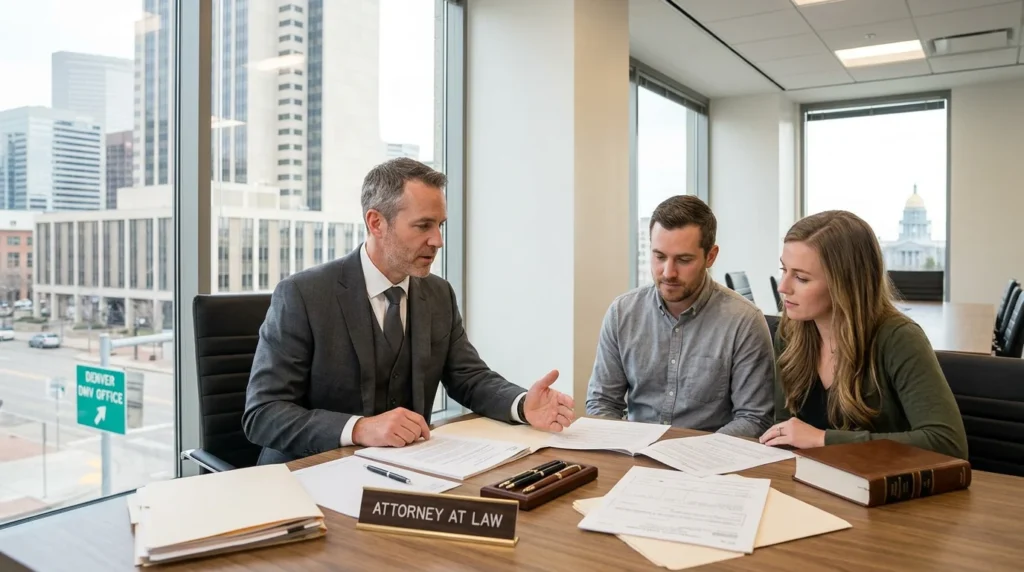
Quick answer: A Denver DMV appeal attorney can help you respond quickly to a suspension, revocation, or denial by filing the right hearing request, organizing the evidence the DMV will consider, and presenting a clear argument tied to the legal issues in your notice. They can also help you avoid paperwork mistakes, confirm reinstatement eligibility, and line up compliance items like interlock or SR-22 so you don’t lose time to preventable delays.
What an Attorney May Do for a DMV Hearing
A DMV action is an administrative case, not a criminal trial, and the process is deadline-driven. A dmv appeal attorney Denver may help you identify what type of action you’re facing (for example: restraint based on alcohol testing/refusal, points, habitual traffic offender, medical reexamination, or a reinstatement denial) and what the DMV says it must prove.
Procedural steps (may apply): An attorney may request the hearing on time, confirm whether you can keep driving on a temporary permit while it’s pending (if offered for your action type), and pursue records requests or subpoenas depending on the hearing forum and rules. They may also help you submit exhibits correctly and preserve issues for any later review.
Evidentiary issues (often hearing-type dependent): DMV hearings are usually document-heavy. An attorney may challenge whether documents are properly authenticated, whether the DMV laid enough foundation for them to be considered, and whether testimony or records actually address the elements the hearing officer must decide. In some hearing types, there may be limited opportunities to question witnesses; in others, the record may be primarily paperwork-based.
Reinstatement compliance (may apply): If your goal is reinstatement or a restricted privilege, an attorney may help you match your situation to the DMV’s checklist—things like SR-22 filings, ignition interlock enrollment/compliance, alcohol evaluation or treatment paperwork, and fees—so you don’t get stuck in a loop of “denied for missing item.”
Colorado and Denver DMV Actions: What Varies and What to Confirm Immediately
Colorado DMV actions can differ based on the exact notice you received and the type of case (for example, an express consent alcohol-related revocation versus a point suspension or a reinstatement denial). Hearing formats, what evidence is considered, and what issues are legally “in play” can also vary by decision type.
I’m not going to guess at exact Colorado deadlines here, because the safest guidance is the most accurate: deadlines vary—confirm immediately from your notice. Look for (1) the last day to request a hearing, (2) whether you must request it in a specific way (online, mail, in person), and (3) whether the notice explains temporary driving privileges while a hearing is pending. If anything is unclear, call the number on the notice the same day and write down the name of the person you spoke with and what they told you.
Common Colorado decision types people see on notices include suspension, revocation, denial of reinstatement, and restrictions (like interlock-related restrictions). The notice should label the decision type and usually states what you can request next (hearing, reconsideration, or reinstatement steps).
What to Gather and What to Ask: Quick Checklists
Documents to gather (bring or send copies): (1) the full DMV notice (front/back), (2) any temporary permit paperwork, (3) your Colorado driving record if you can obtain it, (4) any court paperwork tied to the same incident (summons, disposition, probation terms), (5) proof of insurance and any SR-22 filing confirmation if applicable, (6) ignition interlock documents if applicable (install receipt, calibration/compliance reports), (7) alcohol/drug evaluation or treatment completion paperwork if applicable, (8) any medical forms or physician letters if the action is medical-related, and (9) a timeline you write yourself with dates and locations.
Questions to ask a lawyer: (1) “What exact decision type is this notice, and what are the issues the hearing officer will decide?” (2) “What is the deadline and the safest way to request the hearing?” (3) “What evidence usually matters most for this hearing type, and what is likely irrelevant?” (4) “Are there witnesses in my hearing type, or is it mostly records?” (5) “If we don’t win, what is the fastest path to reinstatement and what documents will the DMV require?” (6) “Could anything I do in the DMV case affect my court case, or vice versa?”
Common avoidable mistakes that cause denials or delays: (1) missing the hearing-request deadline, (2) assuming a court outcome automatically fixes the DMV action, (3) showing up without the notice or with incomplete paperwork, (4) submitting the wrong version of a form (or an unsigned/uncertified copy when a certified one is required), (5) waiting to start interlock/SR-22 steps until after a denial, and (6) arguing fairness rather than addressing the specific legal elements listed in the notice.
What a Good Outcome Looks Like (and What to Watch For)
A “win” isn’t always total dismissal. A solid result can also mean avoiding a longer loss of driving privileges, securing whatever restricted option the notice allows, or getting a clean, accurate roadmap for reinstatement with fewer false starts. The best plan usually includes next steps you can complete immediately after the hearing (or after a decision) so you don’t lose weeks to paperwork cycles.
Watch for red flags like anyone promising guaranteed results or quoting a one-size-fits-all timeline. DMV actions are record-driven, and outcomes depend on the specific notice, the hearing type, and what the admissible record shows. If you want help making sense of your notice, deadlines, and best next move, DeChant Law is a place to get help.