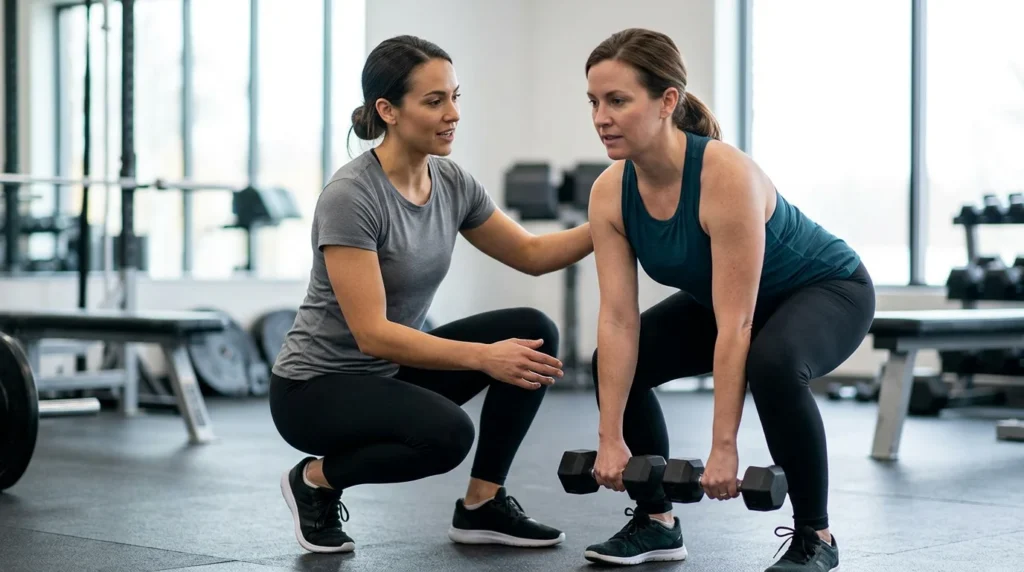
Quick answer: A PCOS fitness coach can help by matching training, nutrition habits, and recovery to common PCOS challenges like fatigue, cravings, irregular cycles, and slower body-composition changes. You don’t strictly need a coach, but guidance can reduce trial-and-error, keep workouts consistent, and prevent overdoing high-stress routines. A solid starter approach is 2–3 strength days, a steady step routine, protein-forward meals, and one sleep or stress habit you can repeat.
What a PCOS-Focused Coach Actually Does
A good PCOS plan isn’t “more cardio and eat less.” Coaching should translate your symptoms and lifestyle into a routine you can repeat for months. A pcos fitness coach typically helps you choose training that may improve strength and insulin sensitivity while keeping overall stress and recovery in a workable place.
Clinically, PCOS is commonly linked with insulin resistance and metabolic risk, so the training and nutrition pieces often focus on steady habits rather than extremes. For a medical overview of PCOS and insulin resistance, see the NHS PCOS page: https://www.nhs.uk/conditions/polycystic-ovary-syndrome-pcos/
Practically, that means setting a realistic weekly schedule, choosing strength exercises you can progress (even if you’re starting from zero), and deciding what cardio supports your energy instead of draining it. Coaching also includes guardrails: how hard to push, when to deload, and how to adjust around poor sleep, a flare-up, or a heavy work week.
Nutrition support is usually habit-based, not a strict meal plan. Expect help with protein and fibre targets, meal timing that reduces “snack spirals,” and strategies for eating out without writing the day off.
A Simple Starter Plan You Can Test for 4 Weeks
If you’re unsure about coaching, run a clear, testable baseline for four weeks. Keep it boring and measurable so you can tell what’s working.
Training: do 2–3 full-body strength sessions per week (about 45–60 minutes). Choose 5–6 moves you can repeat: one squat pattern (goblet squat), one hinge (Romanian deadlift or hip hinge), one push (incline press or push-ups), one pull (row), one carry (farmer carry), and one core move (dead bug or plank). Aim to add 1–2 reps or a small weight increase when form stays solid.
Daily movement: pick a step target range you can hit most days, such as 7,000–10,000 steps, and track it. If that’s too high right now, start lower and add 500–1,000 steps after a consistent week.
Recovery: choose one habit only—either a consistent wake time, a 10–20 minute wind-down routine, or a short walk after your largest meal. Sleep and stress can affect appetite, energy, and weight regulation, so this “one habit” matters. For a clinical perspective on sleep and health, see the NHS sleep guidance: https://www.nhs.uk/live-well/sleep-and-tiredness/
Involve a clinician sooner rather than later if you’re changing medications (including metformin or hormonal contraception), you have severe fatigue, fainting, heavy bleeding, rapid symptom changes, suspected thyroid issues, or a history of disordered eating. A coach can support habits, but diagnosis and medication decisions belong with a qualified clinician.
How Nutrition and Cardio Fit In (Without Extremes)
Most PCOS-friendly nutrition basics are repeatable: consistent protein, plenty of high-fibre carbs (beans, oats, fruit, veg), and fats that keep meals satisfying. A simple action is “protein at every meal” plus a fibre side (veg or fruit) at least twice daily. If cravings hit hard in the afternoon, test a higher-protein lunch and a planned snack rather than grazing.
Cardio can help, but the dose matters. Low-to-moderate intensity work (brisk walking, cycling, incline treadmill) is easier to recover from and can be done more often. High-intensity intervals can be useful in small amounts, but if you notice sleep disruption, appetite spikes, persistent soreness, or feeling “wired but tired,” reduce intensity and prioritise consistency.
Progress should look like slightly heavier weights, a few more reps, better technique, or more total weekly steps—not wiping yourself out every session. If you’re consistently dreading training or your sleep worsens, that’s a signal to scale back and rebuild.
Choosing Support in East London: Checklist, Red Flags, and a Coach-vs-DIY Decision Tree
Use this checklist to pick support that matches PCOS realities and your schedule.
Coach checklist (5–7 things to confirm):
- They ask about symptoms, cycle changes, sleep, stress, injuries, medications, and your current activity before setting a plan.
- They can explain a simple progression plan for strength training (what you’ll do, how you’ll progress, how they’ll deload).
- They track more than weight (strength numbers, steps, waist/hip measures if you want, energy, adherence).
- They give you a minimum effective plan you can do on a busy week (not an all-or-nothing schedule).
- They can coach both gym and home options (dumbbells/bands/bodyweight) and adapt to what you have.
- They encourage clinician involvement for medication changes, severe symptoms, or disordered eating history.
Red flags:
- Extreme calorie cuts, “detoxes,” or banning whole food groups without a medical reason.
- Excessive HIIT as the default, especially if you report fatigue, poor sleep, or high stress.
- Ignoring pain, dizziness, missed periods, or worsening symptoms.
- Promising specific weight-loss timelines or guaranteed results.
- Shaming language around body size, cravings, or “willpower.”
Simple decision tree: DIY is reasonable if you can follow the 4-week starter plan consistently, your symptoms are stable, and you can self-adjust without spiralling into extremes. Choose a coach if you’ve stalled for 6–8 weeks despite consistency, you keep overtraining/undereating, you’re unsure how to progress strength safely, or you need accountability to show up. Choose a clinician first if symptoms are severe, changing quickly, or medication needs review.
For local, hands-on support in East London, that usually means scheduled in-person sessions (for form checks and progression), or online coaching with check-ins and plan updates, with gym-based or home-based programming depending on what’s realistic. If you want that kind of structured support, KBPT Personal Training East London is a place to get help.